
Promoting Rabies Prevention: The Annual Rabies Vaccination Drive
India faces a grave public health crisis with approximately 20,000 rabies deaths each year. According to the World Health Organization, India is endemic for rabies and accounts for 36% of global rabies deaths. A devastating number of cases occur in children under 15 years old, often because bites go unnoticed and untreated.
Rabies prevention is not only about saving individual lives. It is about protecting communities, reducing fear, and ending cycles of violence toward animals through humane, effective solutions.
How Common Is Rabies in India?
Most human rabies infections come from dog bites. India records an estimated 17.4 million dog bites annually, yet rabies remains entirely preventable through sustained vaccination and education programs.
- Around 20,000 people die from rabies in India annually.
- India accounts for 36% of global rabies deaths.
- 30–60% of cases involve children under age 15.
- 95–99% of human rabies cases result from dog bites.
How Can We Prevent Rabies?
Rabies is 99% fatal but 100% preventable through vaccination. Sustainable prevention requires long-term commitment to population management and community education.
Vaccinating and sterilizing dogs has been proven to reduce disease transmission, stabilize populations, and prevent human-dog conflict. Cruel mass killings have repeatedly failed because dogs quickly repopulate affected areas. Education also plays a critical role. Communities must know what to do after a bite and how to safely interact with street dogs.
Proven Measures to Prevent and Eliminate Rabies
The most effective way to prevent rabies in humans is by preventing rabies in dogs. Achieving 70% vaccination coverage among dogs is widely recognized as the threshold required to eliminate the disease. Measures to effectively prevent rabies include:
- vaccinating at least 70% of dogs
- sterilizing dog populations
- educating schools and communities
- monitoring vaccination coverage by region
Post-bite vaccines aren’t readily available in resource-poor countries like India, where the average cost is $49—often unaffordable for families earning just $1-$2 daily. In contrast, dog vaccination costs only $3, offering a cost-effective solution to rabies elimination compared to post-exposure treatment. This is where SAFI’s Annual Rabies Vaccination Drive steps in to help.
SAFI’s Annual Rabies Vaccination Drive for International Rabies Day
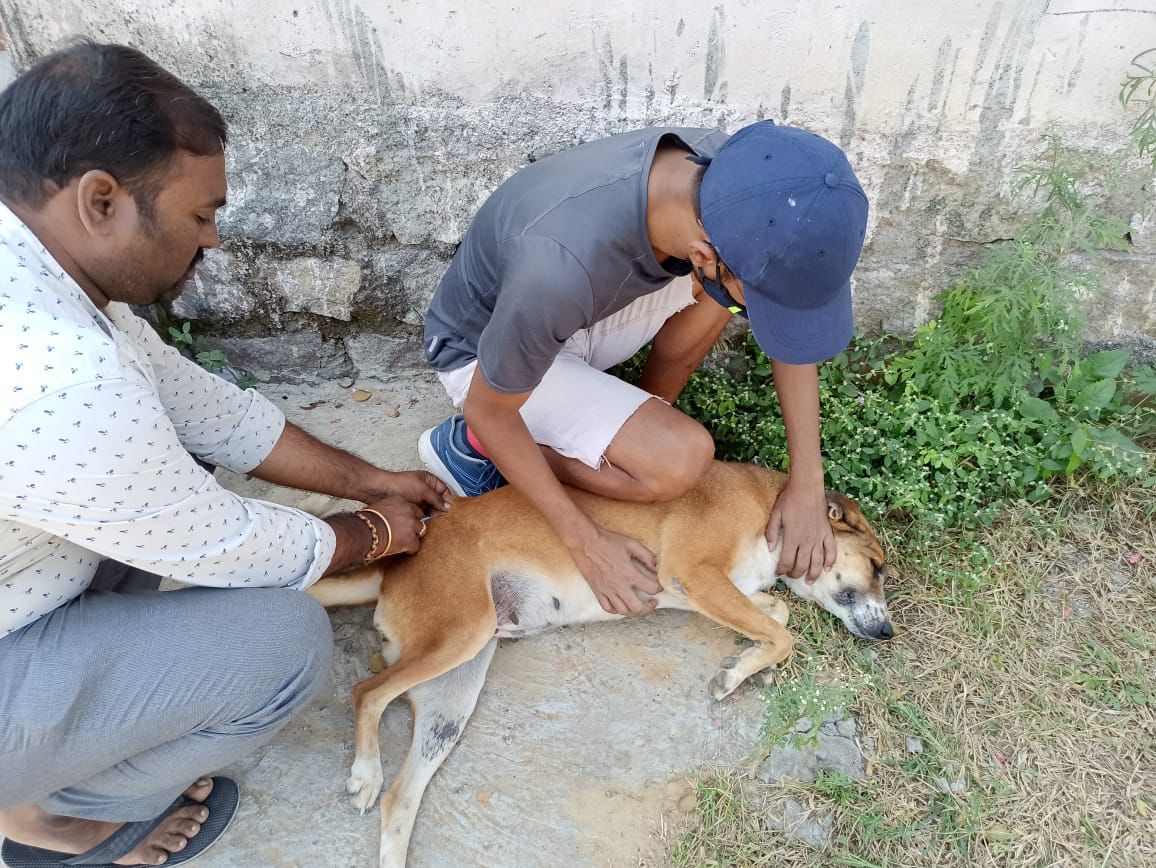
Each year, around International Rabies Day on September 28th, the Stray Animal Foundation of India vaccinates approximately 1,000 street dogs. The drive protects both dog and human health while educating communities on rabies prevention and bite response.
Organizing a vaccination drive requires extensive planning and coordination. Volunteers, feeders, and local supporters help make each drive possible. Teams are carefully structured to ensure efficiency and accurate data collection. Each vaccination team includes:
- a trained dog catcher
- a vaccinator
- a record keeper
- a team member who marks vaccinated dogs with paint
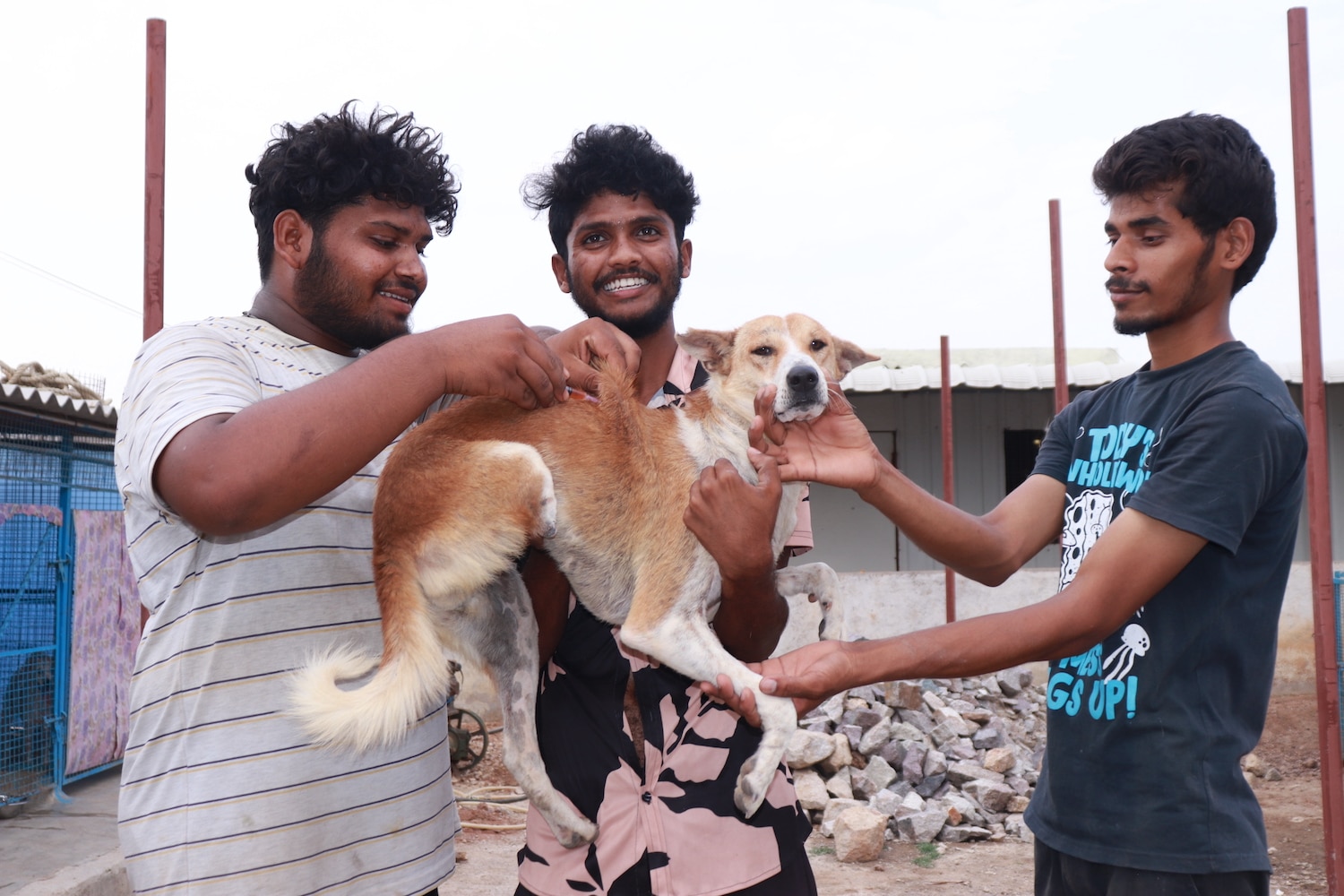
Dogs are safely caught using trained methods, including treats and humane capture techniques. Teams record how many dogs are vaccinated per area, whether they are male or female, and whether they are spayed or neutered. The goal is to reach at least 70% of the dogs in each area. 70% is the number needed to eradicate rabies.
It is proven that cruel mass killings previously done by municipalities didn’t work. Vaccination and sterilization programs have been proven effective in controlling populations in the long term.
Goa is India’s first and only state to be rabies-free for 4 years. Kudos to Mission Rabies, World Veterinary Services Goa, and Dogstrust Worldwide. They proved the theory that achieving 70% vaccination coverage leads to the elimination of the disease.
India’s Human–Stray Dog Conflict & Humane Solutions
Rabies fears and tragic attacks have led to increased tension between communities and stray dogs. In some areas, dogs have been poisoned or killed in response to fear and misinformation. SAFI condemns these acts and promotes humane solutions.
Mass culling programs have proven ineffective because dog populations quickly rebound. Humane vaccination and sterilization programs provide sustainable solutions that protect both humans and animals.
Dogs are naturally social and affectionate. Aggression often stems from fear, injury, or environmental stress rather than inherent danger.
Rabies prevention is one of the most urgent public health missions in India. Through vaccination, sterilization, and education, Stray Animal Foundation of India is working toward a future where no child, family, or animal suffers from this preventable disease.
Supporting our vaccination drive contributes to saving human and canine lives and fosters a safer, healthier India. Together, we can eliminate rabies and create a better future for all living beings.
Thank you for your support, and let’s work together for a rabies-free India.